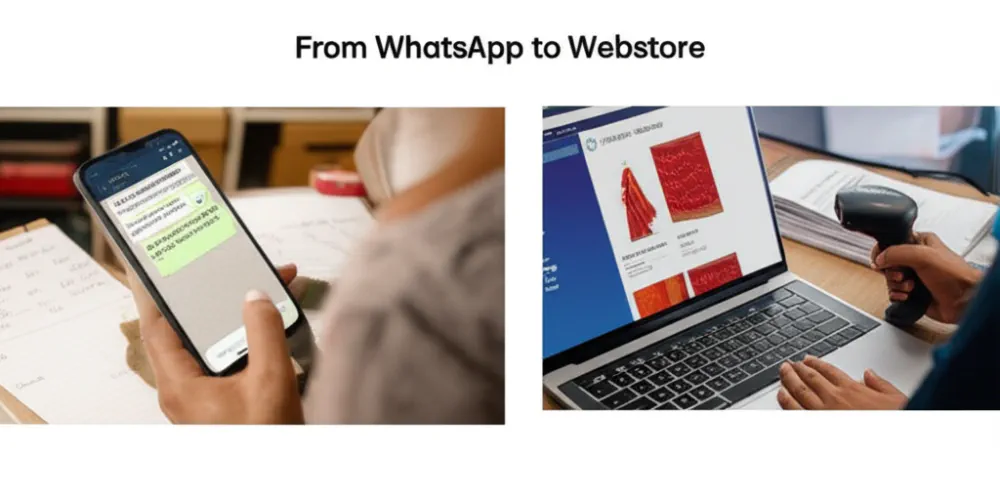
Plenty of Indian brands start the same way: a WhatsApp number, a few product photos, and orders coming in as chat messages. It’s personal, it’s fast, and it costs nothing to begin. This is the story of one seller who started exactly there — and what it took to keep growing once the chat stopped keeping up.
The start: everything in the chat
In the early days, WhatsApp was the business. Orders, questions, payment confirmations — all in the thread. At a handful of orders a day, that’s not a problem; it’s an advantage. Customers liked talking to a real person, and the founder knew every order by heart.
Where it started to crack
Growth is what broke it — the good kind of problem, but a real one.
Payments turned into detective work. Without one place to track them, matching a UPI screenshot to the right order meant scrolling back through chats, which led to disputes and delayed dispatches. Orders arriving from more than one place — chat, a comment, a repeat customer’s “same as last time” — got mixed up, and the wrong thing shipped. And with no record of who bought what, the easy repeat sales quietly slipped away because follow-up was hit-or-miss.
The founder wasn’t short on effort. They were short on a system.
The turning point
The fix wasn’t to leave WhatsApp — it was to put structure behind it.
A proper checkout replaced the screenshot shuffle: buyers paid by UPI or card and payment was confirmed automatically, tied to the order. Every order — from the store, from WhatsApp, from a walk-in — landed in one dashboard, so nothing fell through the cracks and dispatch got faster. And with customer details finally in one place, follow-ups, offers and “your favourite is back in stock” messages became routine instead of accidental.
What changed
With the busywork handled by a system, the founder got their time back — and spent it on the things that actually grow a brand: product, content, and customers. The WhatsApp storefront became a full store serving a wider audience, with steadier revenue and a name people recognised.
The lesson isn’t “WhatsApp doesn’t work.” It’s that WhatsApp is a wonderful place to start a relationship and a poor place to store your business. Keep the conversation. Put a real store, one order log, and a proper checkout behind it — and the next surge of orders is something to celebrate, not survive.
Frequently asked
Can I really run a business on WhatsApp orders?
You can start one — and many great brands do. It works beautifully at low volume. The trouble begins as orders grow: payments get hard to track, details slip, and follow-up gets inconsistent. That's the signal to put a real store and one order system behind the chat, not to abandon WhatsApp.
Do I have to stop selling on WhatsApp to move to a store?
No. The goal is to keep the WhatsApp relationship your customers love, but have the orders, payments and stock live in one place behind it — so a busy day is a good day, not a scramble.
What's the first thing to fix?
Payments and order tracking. Move from manual UPI screenshots to a checkout that confirms payment automatically, and get every order into one dashboard so nothing gets missed.