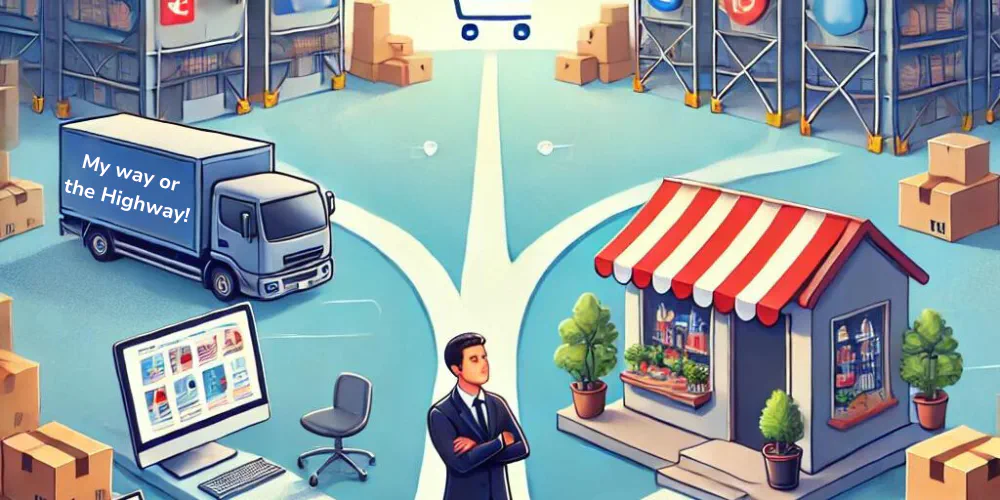
Every festive season the same message goes around: join the marketplace’s own fulfilment program, or risk losing your ranking — sometimes your listing. It’s a clean illustration of the deal you actually signed up for. When a platform can change your fees, bury your product, or de-list you at will, you’re not running a business on it. You’re renting space, on terms that can change without notice.
That’s the case for building your own identity — not instead of marketplaces, but so you’re never at the mercy of one.
How did marketplaces get this much power?
By being genuinely useful. They handed sellers instant reach and took logistics and payments off their plate. But convenience turned into control. Over time the intermediary became the gatekeeper — setting prices, deciding visibility, dictating fulfilment, and keeping the one asset that matters most: the customer relationship.
The real risks of depending on one platform
- You don’t control visibility. An opaque algorithm decides who sees you. You can’t see it, and you can’t argue with it.
- The fees compound. Commissions plus fulfilment charges plus ad spend to stay visible — in a price-sensitive market, that’s your margin.
- You don’t get the customer. The platform keeps the contact details and the buying history, so you can’t build loyalty or bring anyone back.
- One policy change can sink you. A fee hike, a ranking tweak, a sudden de-listing — if most of your revenue rides on one platform, any of those is an emergency.
Why your own identity is the hedge
You don’t beat a marketplace by shouting louder on it. You beat the dependence by owning a relationship it can’t touch.
Build a brand people ask for by name. Real value — product quality, service, the experience of buying from you — is what earns loyalty and lifts you out of pure price competition.
Own a store you control. On your own store you keep the margin the marketplace used to take, and you own the customer data — the basis for repeat business.
Reach buyers directly. Instagram, and especially WhatsApp, let you talk to your customers without paying for the privilege each time. A customer list is an asset no platform can revoke.
Spread your risk. Sell across more than one channel so no single one can decide whether you eat this quarter.
A balanced way forward
Marketplaces aren’t going anywhere, and you shouldn’t abandon the reach. The move is to rebalance: treat marketplaces as a discovery channel, and your own store plus your WhatsApp list as the relationship you own. Build the brand, capture the customer, diversify the channels — and the next “join our program or else” email becomes a choice instead of a threat.
Frequently asked
Should I stop selling on marketplaces like Amazon and Flipkart?
No. Marketplaces give you reach you can't easily buy elsewhere. The risk isn't using them — it's depending on them. Keep them as one channel, and build your own store and customer list alongside so no single platform decides your fate.
What do I actually lose by selling only on a marketplace?
Control and data. The platform sets the fees, owns the customer relationship, decides your visibility, and can change the rules — or de-list you — overnight. You rarely even get your buyers' contact details, so you can't bring them back yourself.
Where do I start if I'm marketplace-only today?
Put up your own store, add a UPI and COD checkout, and start capturing customer details on every order so you can reach buyers on WhatsApp. Then treat marketplaces as reach, and your store as the relationship.