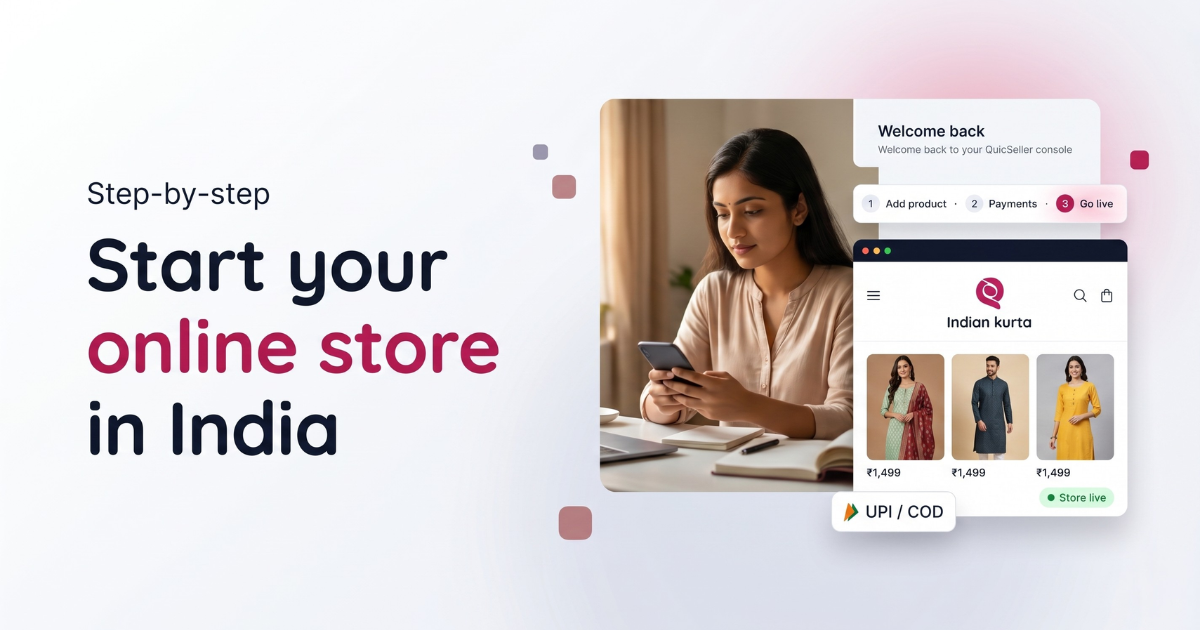
You don’t need a developer, a big budget or weeks of work to sell online in India today — but you do need to get a few India-specific things right: GST, UPI and reliable shipping. Here’s a clear, practical path from idea to first order.
1. Decide what to sell — and to whom
Start narrow. Pick a product you can source reliably and a customer you understand. Most successful Indian D2C stores begin with one tight category — ethnic wear, snacks, skincare, plants — and expand later. If you’ll also sell wholesale, plan for B2C and B2B from one store from the start.
2. Sort out the paperwork
- Business registration — a sole proprietorship is enough to begin for most first-time sellers.
- GST — whether you need to register depends on your turnover and channels. Get this right early; our GST for online sellers guide explains thresholds, HSN codes and input tax credit.
- FSSAI — required if you sell food. See selling food online.
3. Choose your platform
This is the decision that shapes everything else. In India, the cheapest, fastest path is a platform where GST invoicing, UPI, WhatsApp and shipping are built in — not bolted on as paid apps. Compare options in best Shopify alternatives for India.
4. Set up payments — UPI first
UPI is how India pays: over 65 million merchants accept it. Connect a gateway like Razorpay so you can take UPI, cards, wallets, COD and Pay Later. See connect Razorpay. Offering COD alongside UPI widens your reach in Tier 2 and Tier 3 cities.
5. Add your products properly
Good listings sell. For each product, add clear photos, a benefit-led description, variants and SKUs, and the correct HSN code and GST rate so invoices are compliant. If you’re short on time, AI can draft titles, descriptions and HSN suggestions from a photo — see AI product listings.
6. Configure shipping
Connect a multi-carrier service like Shiprocket or Delhivery so you can compare rates and print labels. See compare courier rates. Set honest delivery timelines on your storefront — clarity reduces COD returns.
7. Launch and get your first orders
- Point your domain so the store is on your own brand — see connect a custom domain.
- Turn on WhatsApp order updates so buyers get confirmations and tracking where they already are — see WhatsApp notifications.
- Tell your existing audience on Instagram and WhatsApp. Your first orders almost always come from people who already know you.
- Plan around festivals — Diwali, Holi, Eid, Navratri and Onam drive a large share of Indian commerce. Here’s a festival WhatsApp campaign playbook.
The fastest way to do all of this
A platform with GST, UPI, WhatsApp and shipping built in turns this checklist into an afternoon. Start free and you can be live in about 60 minutes — then spend your time on products and customers, not plumbing.
Frequently asked
How much does it cost to start an online store in India?
You can start from ₹2,999/month on an all-inclusive platform that bundles GST, UPI, WhatsApp and shipping. On top of the subscription, budget for product photos, packaging and a small marketing spend.
Do I need GST to sell online in India?
It depends on your turnover and how you sell. Selling from your own store via your own payment gateway follows the normal registration thresholds, but many marketplaces require GST regardless. Check current rules for your case — see our GST guide.
How long does it take to launch a store?
With a platform that has GST, payments and shipping built in, you can have a live store in about 60 minutes. Sourcing photos and writing product details usually takes longer than the setup itself.