Here’s a normal Tuesday for a growing brand. Your store has orders waiting. Instagram DMs are stacking up. WhatsApp is mixing customer questions with supplier messages. The POS says three units left; the spreadsheet says seven; the marketplace says out of stock. By evening you’ve spent the day refereeing your tools instead of building your brand.
That’s the real cost of running on disconnected apps and manual steps. It looks manageable, and it quietly drains your time, your margin, and your customers’ trust. The fix isn’t another tool — it’s a connected operating system: one place that holds your catalogue, orders, inventory, customers, payments and messaging.
The tax you’re paying without noticing
Nobody sets out to build chaos. It accretes. You start with a store, add a COD plugin, layer on email, put a separate POS at the counter, keep wholesale in a Google Sheet, run a WhatsApp catalogue, and manage a marketplace on its own panel. Every decision was sensible. The sum is fragmentation, and it bills you in four ways.
Time. Every dashboard you switch, every CSV you export, every stock count you sync by hand is a tax. That’s time not spent on product, story, or customers.
Money. Each tool looks inexpensive — ₹999 here, ₹1,999 there — but the damage is in duplicate subscriptions, agency hours spent connecting things that were never meant to connect, and the expensive mistakes: a wrong price live on one channel, a coupon that never expired, a stock mismatch that turns into a refund.
Trust. When your systems disagree, your customer sees it. Stock on Instagram, “unavailable” on the store. Three different order updates. Support promising a date that logistics can’t keep. They don’t see your stack; they see a brand that doesn’t seem to know its own inventory.
Data. You have plenty of numbers and almost no answers. Sessions live apart from POS data, marketplace orders, and WhatsApp chats — so “which customers are worth most?” and “which discounts kill my margin?” stay unanswered.
What “one system” actually buys you
When the core is unified and channels are just views onto it, the benefits compound. Inventory is accurate everywhere, so you stop overselling. A catalogue edit happens once and shows up on every channel. Pricing and offers are consistent, which reads to customers as reliability. And you can finally see which categories are profitable after returns and discounts — so you cut what doesn’t work and back what does. Best of all, a new store or marketplace plugs into the same system instead of multiplying the mess.
What it looks like under the hood
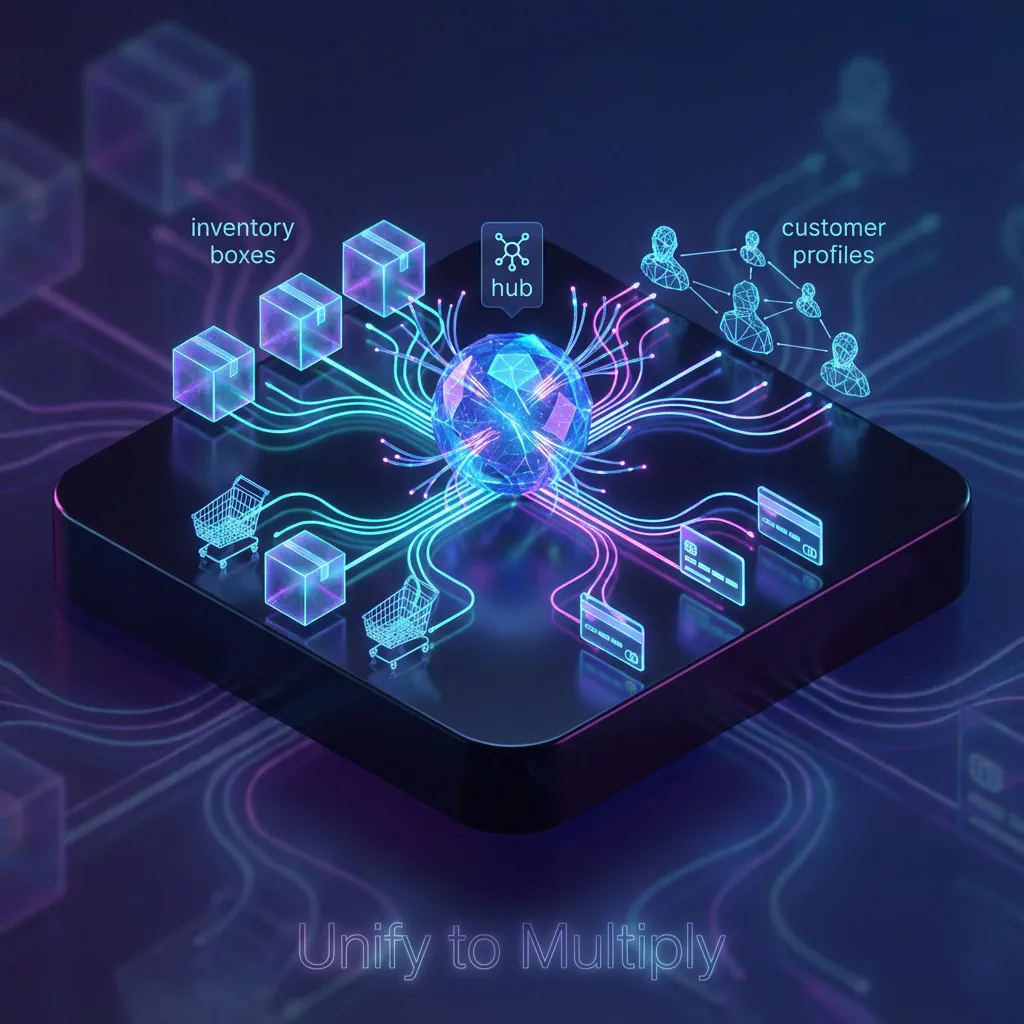
A brand operating system has a few layers, but the idea is simple — one source of truth, many windows:
- Core data — one product catalogue, one live inventory count, one customer profile with full history.
- Transactions — one order record for website, counter, marketplace and WhatsApp; GST-correct billing; UPI, cards, wallets and COD on one rail.
- Experience — your store, POS screen, marketplace listings and WhatsApp flows, all drawing from the same truth.
- Intelligence — dashboards that merge sales, marketing and operations, so you’re deciding on facts, not hunches.
Moving without the drama
You don’t rip it all out overnight. Audit what you use and what each tool actually does. Map how an order really travels, and mark every point where someone re-keys data by hand. Name your sources of truth — one for products, stock, customers and orders. Then migrate in phases and measure the wins: hours saved, fewer cancellations, more repeat buyers.
The next few years won’t reward the brand with the most tools or the flashiest launch. They’ll reward the one that runs on a system it can trust. Growth isn’t adding another app — it’s running your whole brand on one connected core that protects your time, your margins, and your name.
Frequently asked
What is a brand operating system?
It's a single system that holds the truth for your catalogue, inventory, orders, customers and payments — with your website, marketplaces, POS and WhatsApp all plugging into it. Not another app on the pile; the layer everything else runs on.
How is this different from just using more tools?
More tools add more places for data to live and more things to reconcile. An operating system does the opposite — one product record, one stock count, one order log — so adding a channel doesn't add complexity.
Does this apply if I mostly sell on WhatsApp and Instagram?
Yes. WhatsApp and Instagram are just channels. The point is that the orders, stock and customer history behind them live in one place, so a busy sale day doesn't turn into screenshots and guesswork.